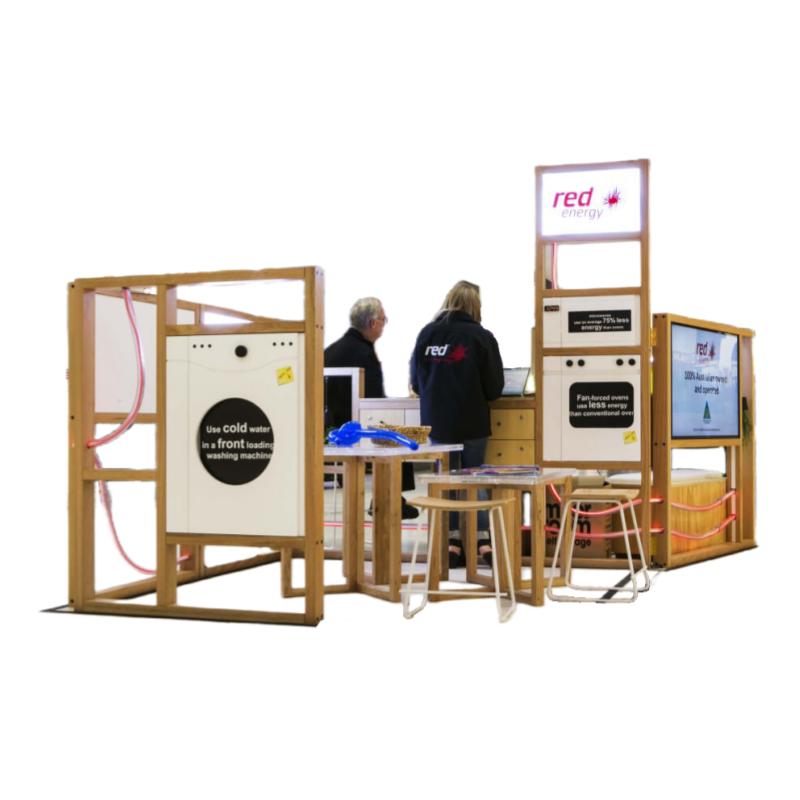
Red Energy is a well-known energy retailer in Australia. It was established in 2007, with the core business of providing affordable and high-quality electricity and natural gas services. At the same time, the brand actively advocates the concept of energy conservation and environmental protection in energy usage and is committed to helping consumers reduce energy consumption and costs, promoting the popularization of sustainable energy lifestyles. As an important offline carrier for brand interaction with consumers, its kiosks precisely convey brand concepts in multiple aspects and enhance user experience.

Design concept and style
The overall style leans towards modern simplicity, while incorporating warm wooden elements, creating an atmosphere that is both professional and close to consumers. The illuminated sign at the top is very eye-catching. It can quickly attract the attention of passers-by and enhance the brand’s recognition. This design strategy helps to capture consumers’ attention at the first moment, laying the foundation for subsequent brand information transmission and product promotion.
Layout planning
The interior layout of the kiosks has been clearly divided into functional zones. There is a consultation area equipped with tables and chairs, which is convenient for consumers to have in-depth communication with brand consultants. Here, the consultant can provide consumers with a detailed explanation of Red Energy’s energy service advantages, such as the cost-effectiveness of its electricity and gas packages. And how to achieve energy conservation and cost savings by choosing the services of this brand. At the same time, it will also popularize energy-saving knowledge and introduce the advantages of related energy-saving products, etc.

The exhibition area carefully displays models of household appliances related to energy conservation. The model of the washing machine is marked with “Use cold water in a front-loading washing machine.” Beside the oven model, there are explanations such as “Fan-forced ovens use less energy than conventional ovens.” These displays directly convey the energy-saving concept and the energy-saving advantages of the products to consumers, helping them better understand the energy-saving lifestyle advocated by Red Energy. And it can also promote how the brand helps consumers practice energy conservation through professional knowledge and advice. In addition, there is also an information display screen area. The brand promotion video of Red Energy will be played on the screen, introducing the brand’s development history and service features. Energy-saving knowledge popularization content will also be played to further strengthen the brand image and information dissemination.
Material application
The main frame of the kiosk extensively uses wooden materials. Wooden materials give people a warm and natural feeling, which is in line with the environmental protection concept advocated by Red Energy. Meanwhile, wood has good plasticity and processability and can be made into various shaped frame structures. The materials not only ensure the structural stability of the kiosk but also add a touch of simple beauty to the overall design.

The display panels and other parts are made of whiteboards. This whiteboard is not only easy to clean but also can form a sharp color contrast with the wooden frame, making the displayed content more prominent. The illuminated signboard uses light-transmitting materials such as acrylic in combination with the internal lighting system, effectively enhancing the visibility of the brand logo.
The connection points of tables and chairs and the corners of frames have metal fittings for reinforcement. These metal accessories not only enhance the structural strength of the kiosk, enabling it to maintain long-term stability in the usage environment of the shopping mall. At the same time, the metal material also adds a touch of industrial texture to the overall design, forming an interesting material contrast with the wood and board materials.