In an era where appearance is justice and experience is paramount, young women’s expectations go beyond just “selling products.” They desire a space that combines aesthetic enjoyment, social experience, and emotional resonance. Step into a cosmetics store popular with young women, and you’ll find it’s not just a place to shop but an immersive journey of beauty. What kind of decor can make young women linger? Let’s explore the secrets through the details.
A High-Appeal Space
Young women are highly attuned to beauty, making the first impression of a cosmetics store crucial. Stores that are popular often inject a “high-appeal gene” into their space design.
Store design requires a clever blend of color and material. As seen in images, the store uses white and gray as the main tones, complemented by soft purple lighting, creating a simple yet sophisticated atmosphere. White symbolizes purity, fitting the “natural, safe” attributes of cosmetics; gray adds texture, giving the space a sense of solidity; and purple lighting is the highlight, with its soft tones accentuating product colors and adding a dreamy feel, precisely targeting young women’s pursuit of “romance” and “elegance.”

The choice of materials is equally thoughtful. Marble walls elevate the store’s status, glass display cases are light and airy, and the addition of wooden elements (like strip designs on the ceiling) brings a natural warmth. The collision of various materials enriches the space’s layers, blending modernity with warmth, as if saying, “This is not just a shopping space, but your aesthetic realm.”
Lighting is the “ambiance setter” in cosmetics stores. The strategically hung chandeliers are not just for illumination but also decorative highlights. The warm yellow light is soft and non-glaring, precisely highlighting product colors and the sheen of skincare bottles. Especially the hidden lighting in glass display cases, illuminating products from below or the side, creates a “starry” effect, making each cosmetic a visual focal point. Young women stepping into such a space feel like they’re on a fashion magazine shoot, naturally igniting their desire to shop.
Immersive Experience
Contemporary young women dislike the stereotypical “pushy shopping” and prefer the joy of independent exploration. The decor design of cosmetics stores should, therefore, focus on creating an “immersive experience.”
The store adopts an open layout with neatly arranged display cases and spacious aisles. Whether it’s the brand-specific areas along the walls or the central glass cases, everything is open to customers. Young women can freely browse and try products without feeling crowded or followed by sales staff. This layout design conveys “trust and respect,” allowing customers to enjoy the shopping process in the most comfortable state.
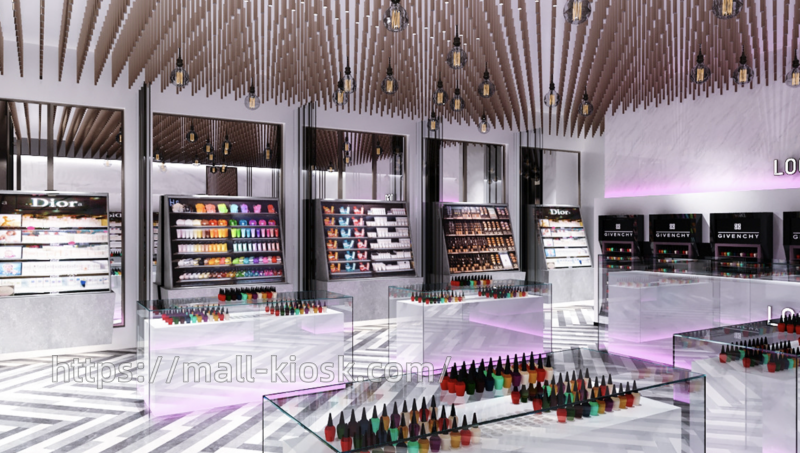
Observing the display in pictures, you’ll notice clear brand sections, each with a thematic feel. For example, the “Dior” zone, with neatly arranged makeup products and brand logos, creates a high-end fashion atmosphere; the nail polish area is organized by color, with reds, greens, and purples in order, like a tempting color palette. This thematic display not only helps customers find products easily but also evokes emotional resonance. Seeing beautifully arranged products, young women can’t help but imagine “themselves using the products,” turning shopping into a yearning for a better life.
Detail Design
Young women’s attention to detail is “fastidious,” and the decor’s ability to withstand scrutiny is key in a cosmetics store.
In such stores, besides product display areas, there are many user-friendly designs. For instance, a dedicated trial area with makeup mirrors, cotton pads, and disposable beauty tools for customers to try products with peace of mind; a resting area with comfortable seating, complemented by green plants or art installations, for friends to take a break. These details, though small, make young women feel “valued,” fostering a positive impression of the store.
Young women love sharing their lives on social media, so a “viral photo spot” in a cosmetics store is naturally more popular. The ceiling design is a highlight: wooden strips combined with chandeliers form a unique visual symbol; the combination of marble walls and purple lighting makes for a stylish photo backdrop. The brand LOGO on glass display cases is simple and eye-catching, lending a sense of sophistication to photos. When customers share store photos on social platforms, they inadvertently promote the store, creating a virtuous cycle of “looking good—sharing—driving traffic.”
Brand and Personality Integration
Young women’s choice of cosmetics is both a recognition of the product and an alignment with the brand culture. The decor of a cosmetics store must also convey the brand’s tone and create a unique personality.
As seen in pictures, the “LOGO” appears multiple times in the store without being obtrusive. Whether it’s the lighting LOGO on the wall or the brand logo on display cases, the design is integrated into the space, deepening customers’ memory of the brand. This reinforcement makes the store not just a sales place but a window displaying the brand culture. Young women entering the store can directly feel the brand’s style and attitude, establishing an emotional connection.

Beyond standardized brand displays, some cosmetics stores set up personalized thematic areas. For example, seasonal limited editions, hot IP collaboration zones, or scenes based on current trends. The decor of these areas changes accordingly, whether by altering lighting colors or updating display props. Young women experience something new with each visit, turning it into a “treasure hunt,” continuously raising their expectations of the store.
Technology Empowerment
In the digital age, young women’s pursuit of “tech-savvy” is also reflected in cosmetics stores. Smart decor design is becoming a new attraction.
Some stores introduce smart display cases that show product ingredients, usage tutorials, and user reviews on electronic screens, which customers can access with a light touch. There’s also AR try-on technology that allows customers to “test colors” of lipstick and eyeshadow or even simulate a full makeup look without physical application. These technological elements make decor more than just physical space; they enhance the experience through interaction, meeting young women’s desire for “novelty” and “convenience.”
By analyzing customer movement data, cosmetics stores also optimize their decor layout. For example, placing popular products in prime locations and adjusting display combinations based on sales data. This “thinking” space design is essentially a deep insight into young women’s needs—using data to drive decor, making every shopping trip more efficient and considerate.